
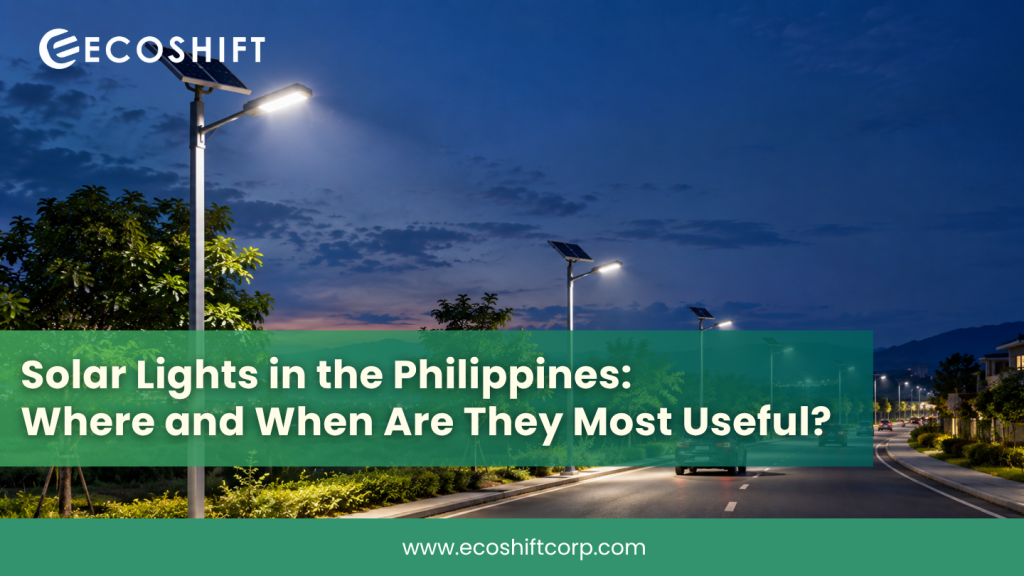
Outdoor areas need reliable lighting, especially in places where people regularly travel, work, or gather after dark. For businesses, communities, and organizations, choosing the right lighting for these spaces can help improve visibility while managing energy consumption.
Solar lighting can be a practical option for outdoor applications because it uses energy from the sun to power the lights. This makes it useful for areas where running electrical connections may be difficult, costly, or less practical.
But where does solar lighting work best?
Here are some outdoor areas where it can be a practical lighting upgrade.
1. Roads and Streets
Roads and streets need consistent lighting to provide better visibility for drivers, pedestrians, and nearby communities.
A solar street light can be installed along:
- Roads
- Subdivisions
- barangay streets
- Parking Areas
- Other outdoor pathways
Since these fixtures are designed to collect and store solar energy during the day, they can operate at night without relying directly on the usual electrical supply.
For communities, Businesses, and local government projects, solar streetlights can be considered for roads and areas where extending electrical connections may require additional planning and infrastructure.
2. Parks and Community Areas
Public parks, open spaces, and community areas can benefit from outdoor lighting, especially when these spaces are used in the evening.
Solar lighting can be used along walkways, open areas, entrances, and other locations where additional visibility is needed. It can also be useful for communities looking to improve lighting in outdoor areas while considering energy consumption.
For larger community projects, the placement and spacing of streetlights should still be planned according to the area’s layout and lighting requirements.
3. Parking Areas and Outdoor Facilities
Parking lots and outdoor facilities need adequate lighting to help people see clearly when entering, leaving, or moving around the area at night.
A solar light can be considered for parking spaces, warehouses, commercial properties, and other outdoor facilities. It can provide illumination without requiring every fixture to be connected to the building’s electrical system.
Before installation, consider the size of the area, mounting height, required brightness, and the amount of sunlight available throughout the day.
4. Remote or Hard-to-Reach Locations
Some outdoor areas are far from existing electrical infrastructure. Installing traditional lighting in these locations may require additional wiring, electrical work, or infrastructure.
This is where solar lighting can be particularly useful.
A properly selected LED solar street light can operate independently from the main electrical supply, making it an option for roads, pathways, communities, and other locations where connecting to the grid may be more challenging.
However, the location still needs enough sunlight during the day to properly charge the system.
5. Business and Commercial Outdoor Spaces
Businesses with outdoor areas can also consider solar lighting for pathways, parking areas, entrances, and other exterior spaces.
For commercial properties, lighting should not only provide visibility but also match the requirements of the space. Consider how the area is used, how long the lights need to operate, and where the fixtures will be positioned.
For larger properties, combining different types of outdoor light fixtures may also be practical depending on the application.
When Should You Consider Solar Lighting?
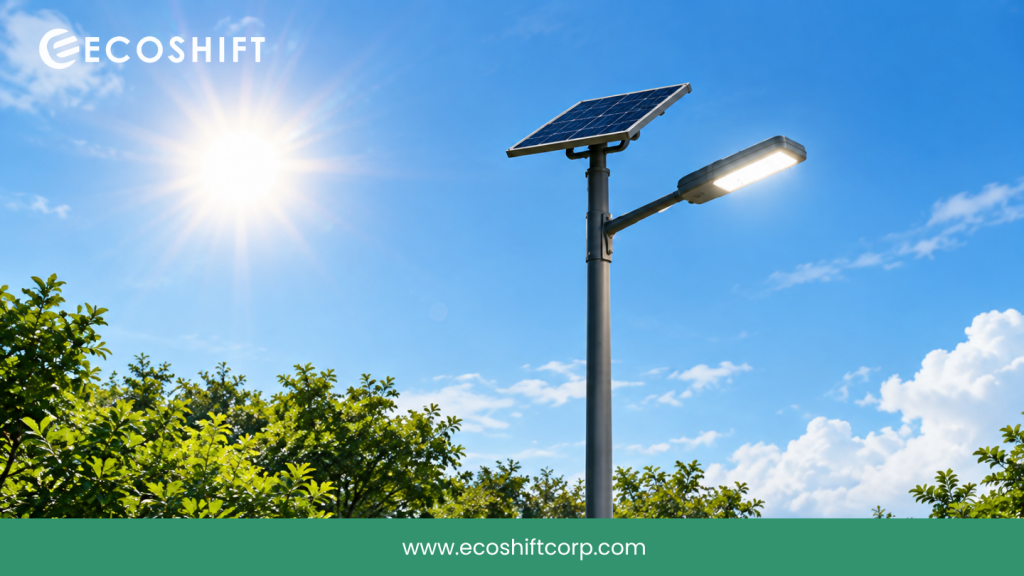
Solar lighting can be a practical option when you need lighting for an outdoor area and want to reduce dependence on conventional electrical connections.
It may be worth considering when:
- The area has sufficient sunlight during the day.
- Extending electrical connections would be difficult or costly.
- You need lighting for roads, pathways, parking areas, or open spaces.
- The project is located in a remote or developing area.
- You want to explore energy-saving options for outdoor lighting.
- The lighting system needs to operate independently at night.
Keep in mind that solar lighting is not automatically the right solution for every location. The area’s sunlight exposure, required illumination, installation location, weather conditions, and expected operating hours should all be considered before choosing a system.
Choosing the Right Solar Light for Your Space
Different outdoor applications have different lighting requirements. A small pathway may need a different fixture from a road, parking area, or large community space.
When planning your project, consider:
Application: Identify whether the light will be used for a road, pathway, parking area, community space, or commercial property.
Brightness: Choose a fixture with enough light output for the size and purpose of the area.
Solar exposure: Make sure the solar panel can receive sufficient sunlight during the day.
Operating time: Consider how many hours the light needs to operate throughout the night.
Installation: Check the mounting location, pole height, spacing, and surrounding structures before installation.
The right combination of fixture and placement can help you get better performance from your outdoor lighting system.
A Practical Option for Outdoor Lighting
For roads, communities, businesses, and outdoor facilities, solar lighting can provide an alternative way to illuminate spaces while making use of available sunlight.
At Ecoshift, we provide lighting options for different applications, from outdoor areas and roads to commercial and community projects. If you’re planning a lighting upgrade, our engineering, technical team, and sales team can help you identify suitable products based on your space and requirements.
📞 Contact us now and experience our 10-min response!
Visit: https://www.ecoshiftcorp.com/
Call/Message: +639171132105 / +639178880722
Email: [email protected]


