
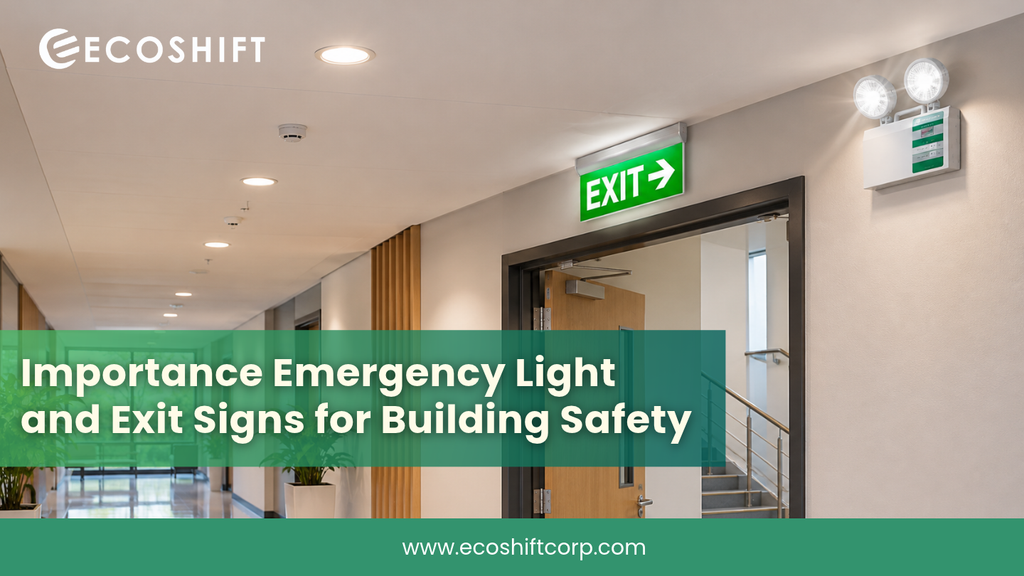
Imagine you’re at work, shopping in a store, attending class, or visiting a public building when the power suddenly goes out. The usual lights switch off, hallways become dark, and people need to find their way to the nearest exit.
This is why emergency lighting and exit signs are important parts of building safety. They help occupants navigate designated evacuation routes when normal lighting is unavailable.
For homeowners, business owners, building administrators, contractors, and local government units, planning for these situations is an important step toward creating safer spaces.
Why Are Emergency Lights and Exit Signs Important?
Regular lighting helps people carry out their daily activities, but it may not be available during a power interruption. Emergency lighting provides illumination when the normal power supply fails, while exit signs help people identify designated exits.
These fixtures serve different but complementary purposes.
1. Emergency Lights Help People See Their Surroundings
When a building suddenly loses power, people may struggle to see stairs, corridors, changes in floor level, or nearby obstacles.
Emergency lights are designed to provide illumination during power interruptions, helping occupants move through important areas while following the building’s emergency procedures.
They are particularly relevant in offices, schools, commercial buildings, warehouses, and public facilities where many people may be present.
2. Exit Signs Help Identify Evacuation Routes
During an emergency, people need to know where the designated exits are located.
Visible exit signage helps occupants identify the appropriate direction to take. When combined with suitable emergency lighting, these signs can make evacuation routes easier to recognize when regular lights are unavailable.
For facilities with multiple floors, long corridors, or several exits, careful placement is especially important.
3. They Support Building Preparedness
Power interruptions and other emergencies can happen unexpectedly. Having suitable emergency lighting in place helps building administrators prepare for situations in which normal illumination is disrupted.
However, lighting is only one part of an effective safety plan. Emergency fixtures should be supported by proper installation, routine testing, maintenance, and established evacuation procedures.
For additional information, read Ecoshift’s guide to emergency lights and disaster preparedness.
Where Should Emergency Lighting Be Considered?
The appropriate locations depend on the building layout, applicable safety requirements, and how people move through the facility.
Offices and Commercial Buildings
Office buildings and commercial establishments should consider the routes employees, customers, and visitors may need to use during an emergency.
These can include corridors, stairways, exit doors, and other areas along designated evacuation routes.
Schools and Educational Facilities
Schools need to consider the movement of students, teachers, staff, and visitors. Emergency lighting and visible exit signs can help people navigate hallways, staircases, and designated exits if normal lighting fails.
Planning should account for the facility’s layout and applicable safety standards.
Warehouses and Industrial Facilities
Warehouses and industrial spaces may have large floor areas, storage racks, loading zones, and designated pedestrian routes.
During a power interruption, these conditions can make navigation more challenging. Emergency lighting should therefore be considered as part of the facility’s overall safety planning.
Public Buildings and Community Facilities
Government offices, barangay halls, public facilities, and other buildings that accommodate visitors should also consider how occupants can reach designated exits during an emergency.
The lighting arrangement should reflect the building’s actual layout and expected occupancy.
What Should You Check Before Installing Emergency Lighting?
- Coverage: Identify the corridors, stairways, exits, and other relevant areas that need emergency illumination.
- Visibility: Make sure exit signs can be seen clearly from the intended viewing positions.
- Backup operation: Check the product’s battery, rated operating duration, and activation behavior.
- Installation: Ensure fixtures are positioned appropriately for the building layout and applicable requirements.
- Maintenance: Establish a schedule for inspection, testing, and battery checks.
- Compliance: Consult qualified professionals and the relevant authorities regarding applicable fire and building safety requirements.
Choose Lighting That Supports Your Safety Plan
A suitable emergency lighting system helps people navigate a building when regular lighting is unavailable. Emergency lights provide illumination, while exit signs help occupants identify designated evacuation routes.
You can also explore our guide on choosing the right panel light for information about selecting general lighting for everyday use. Remember that ordinary panel lights serve a different purpose from dedicated emergency lighting.
Explore Ecoshift’s emergency lighting products to review available options for your facility.
Preparing a new building or upgrading an existing space? Consider emergency lighting early in your project so that safety requirements can be addressed alongside your other lighting needs.
📞 Contact us now and experience our 10-min response!
Visit: https://www.ecoshiftcorp.com/
Call/Message: +639171132105 / +639178880722
Email: [email protected]


